The Women Who Founded the Mendocino Coast Audubon Society
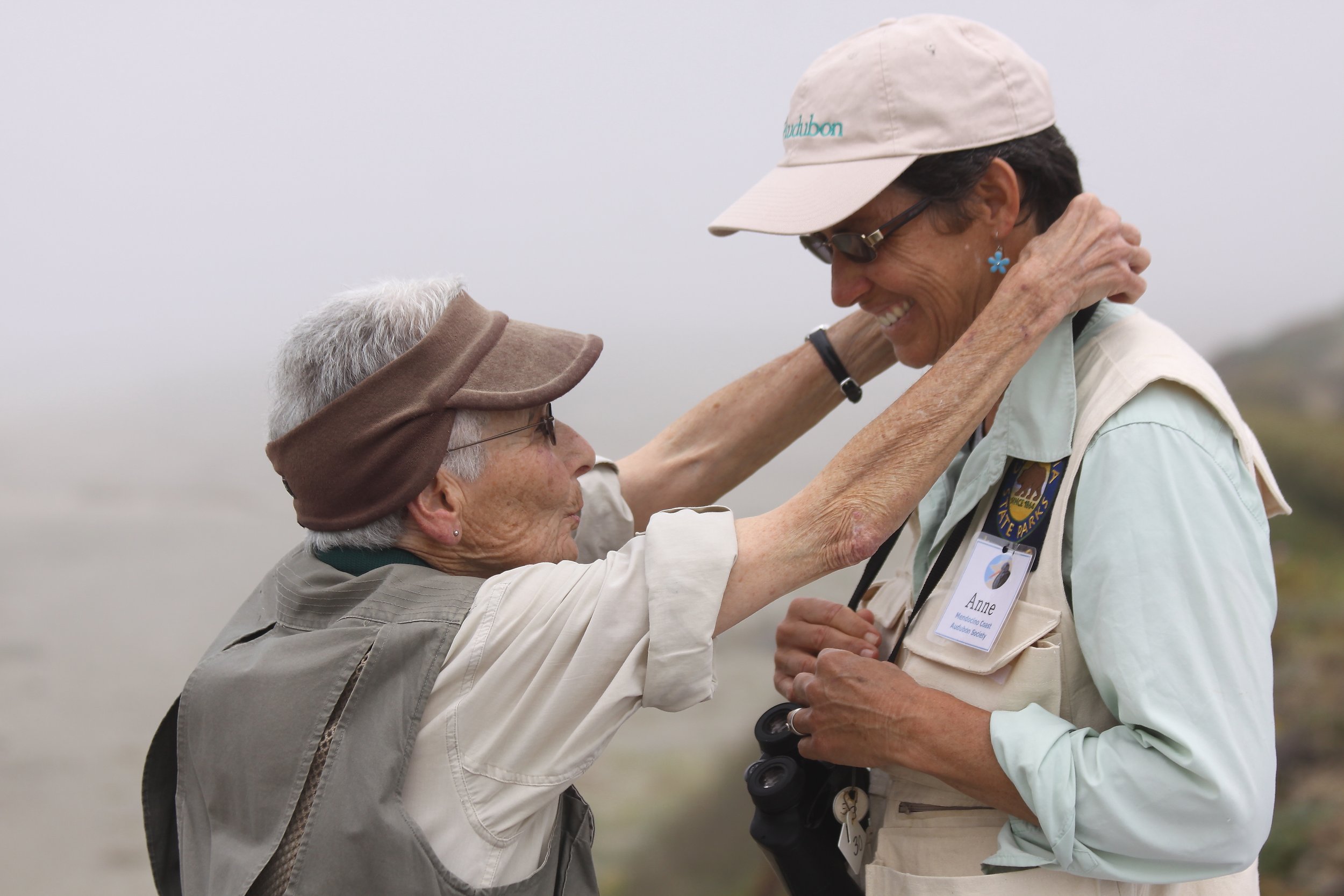
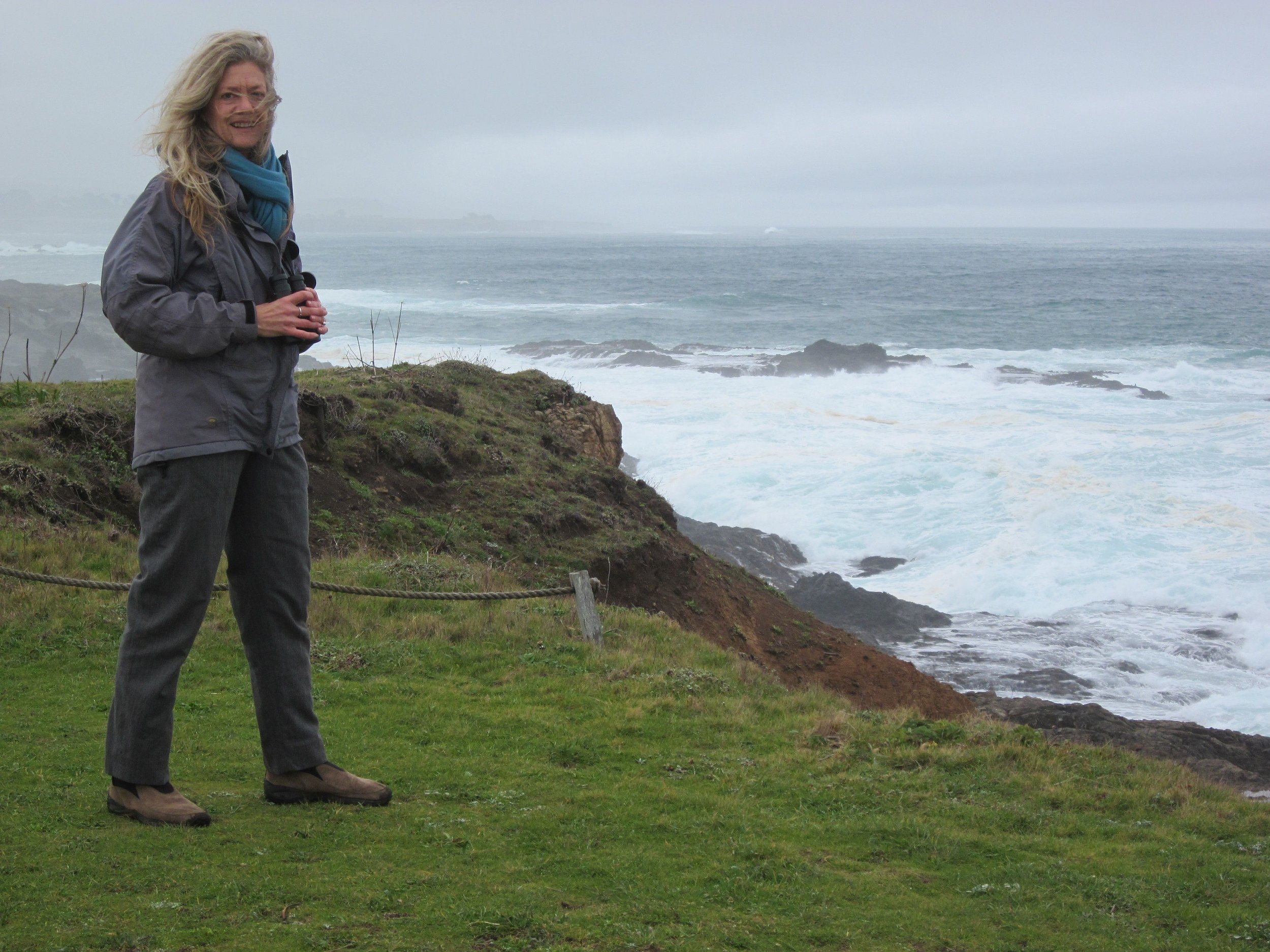
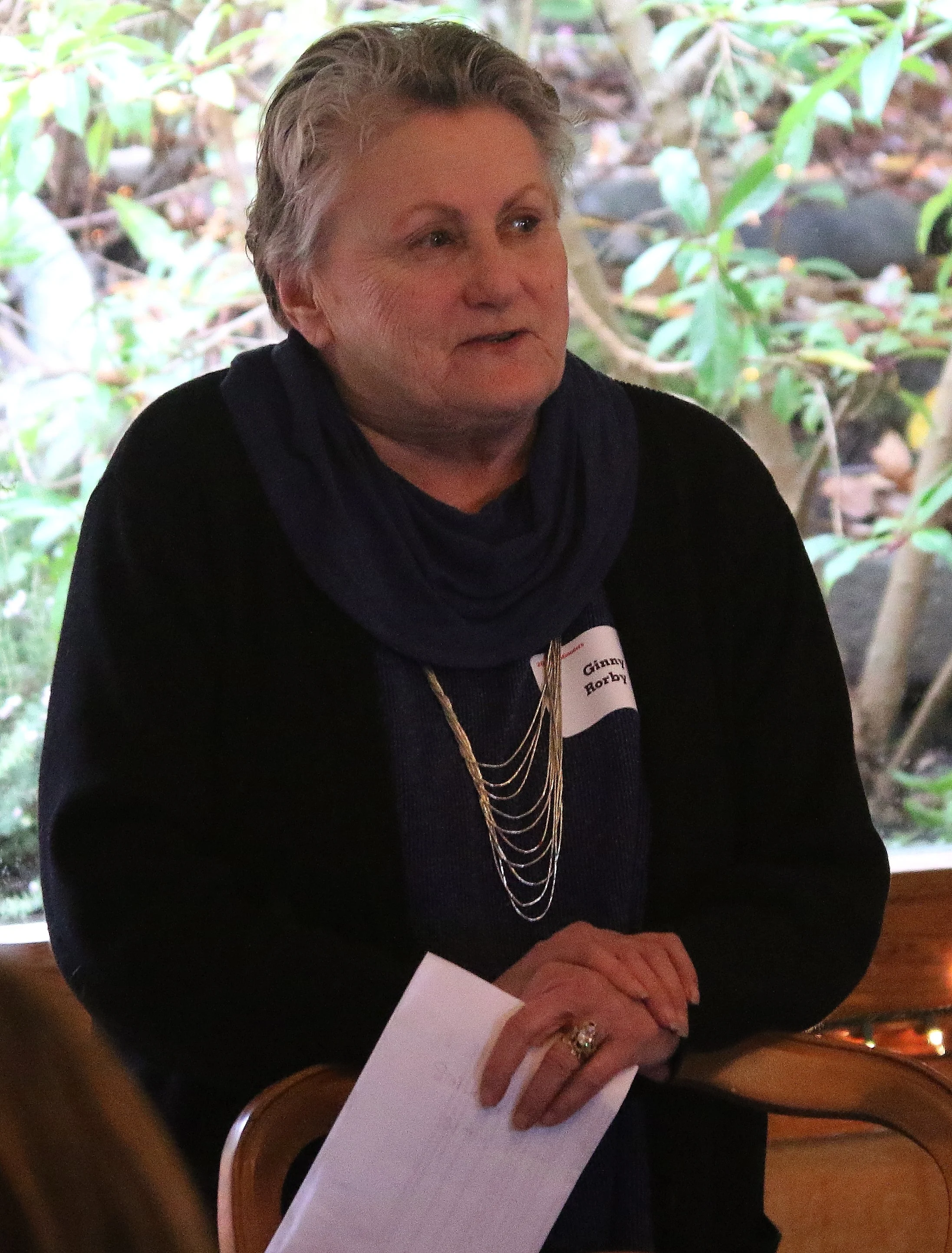
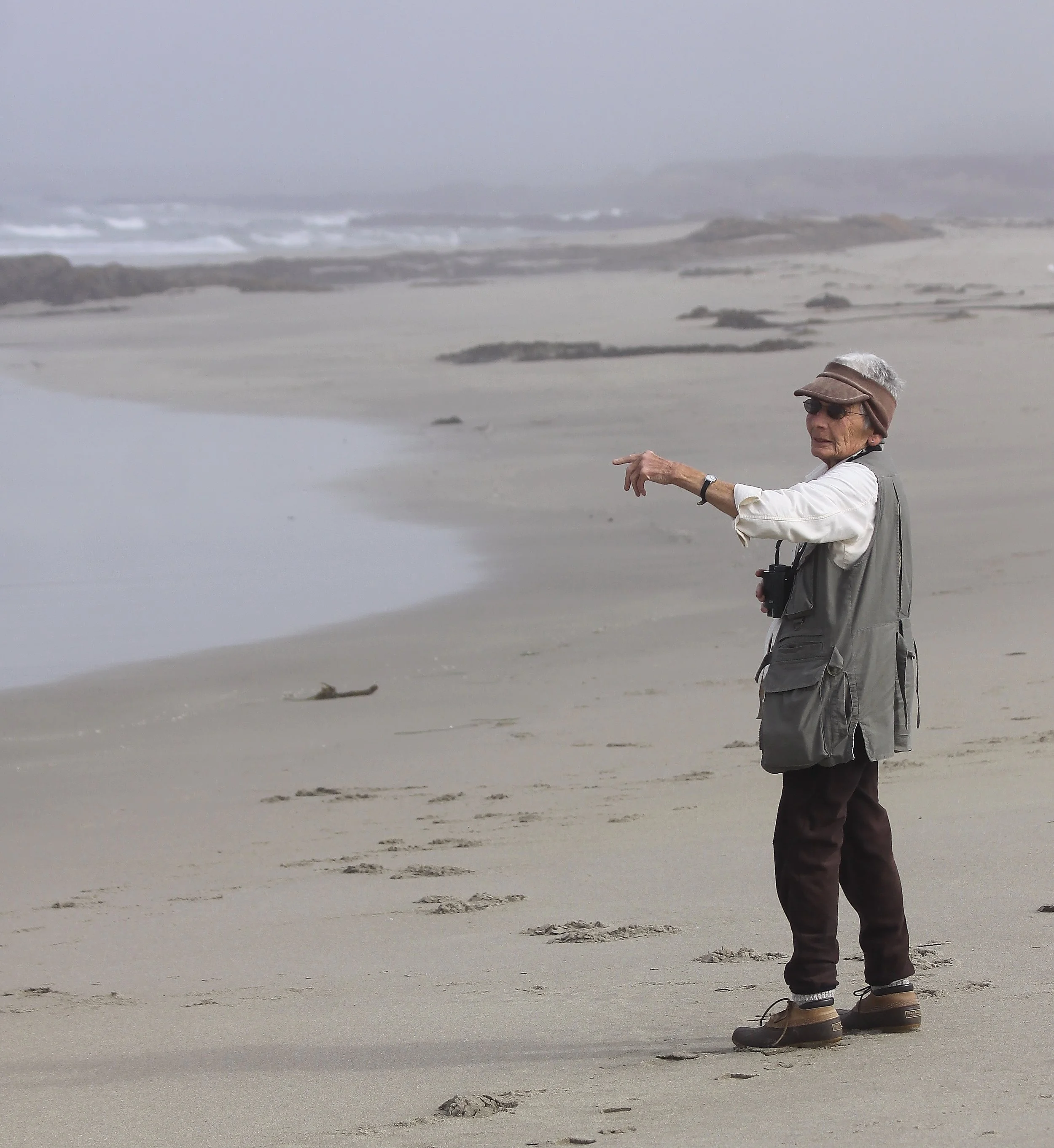
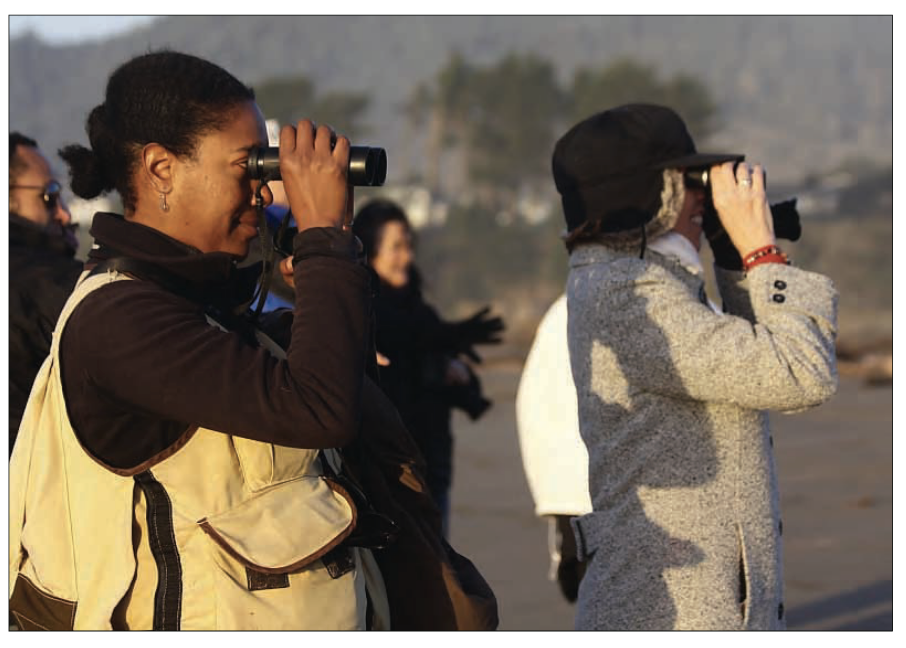
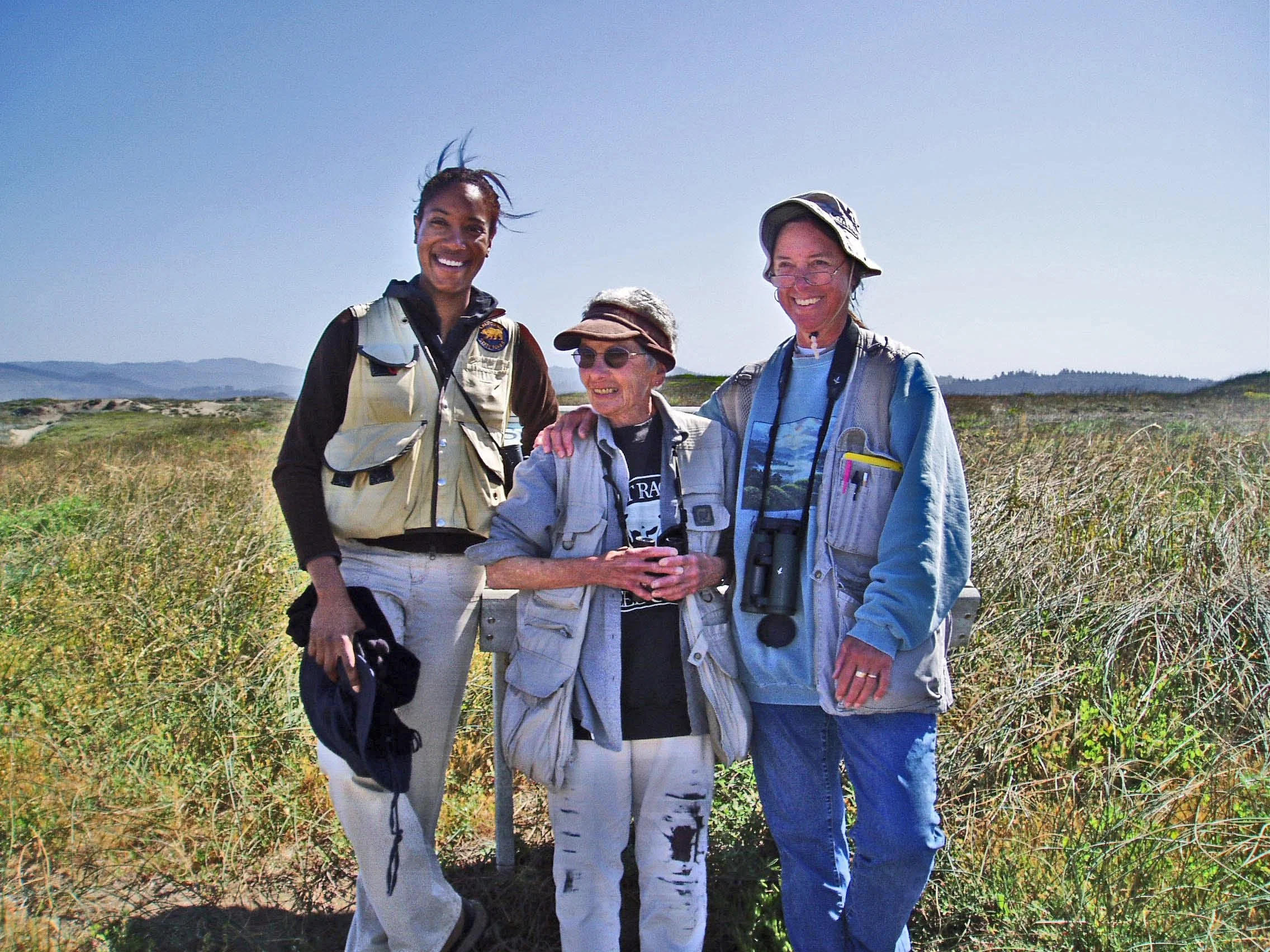
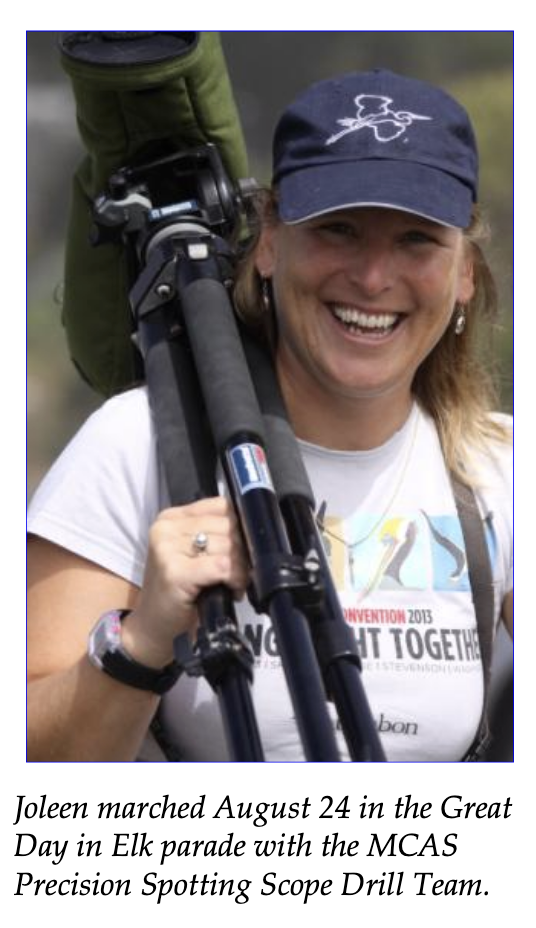
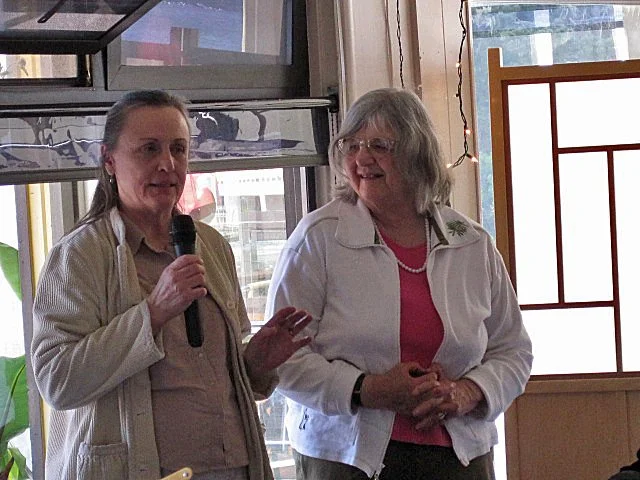
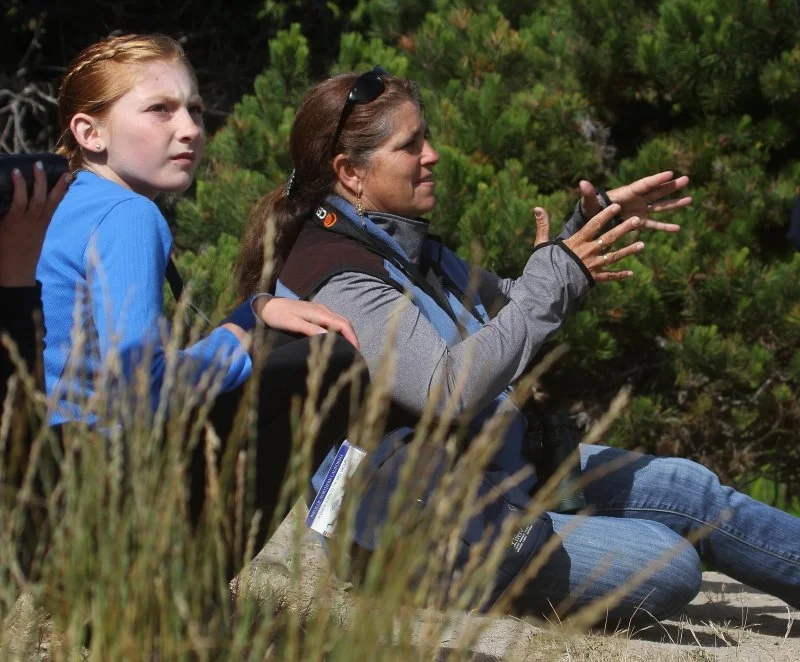
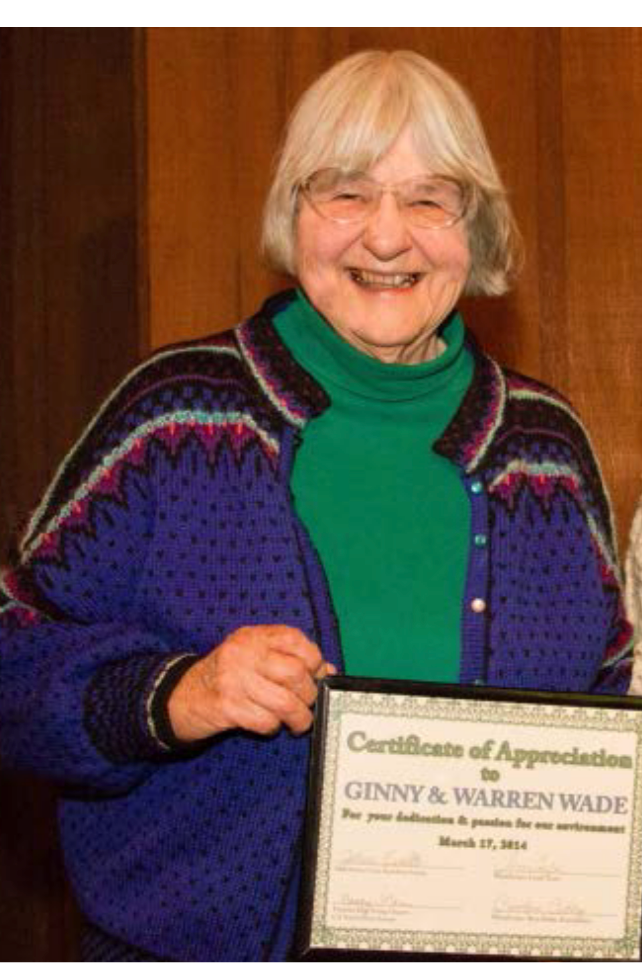
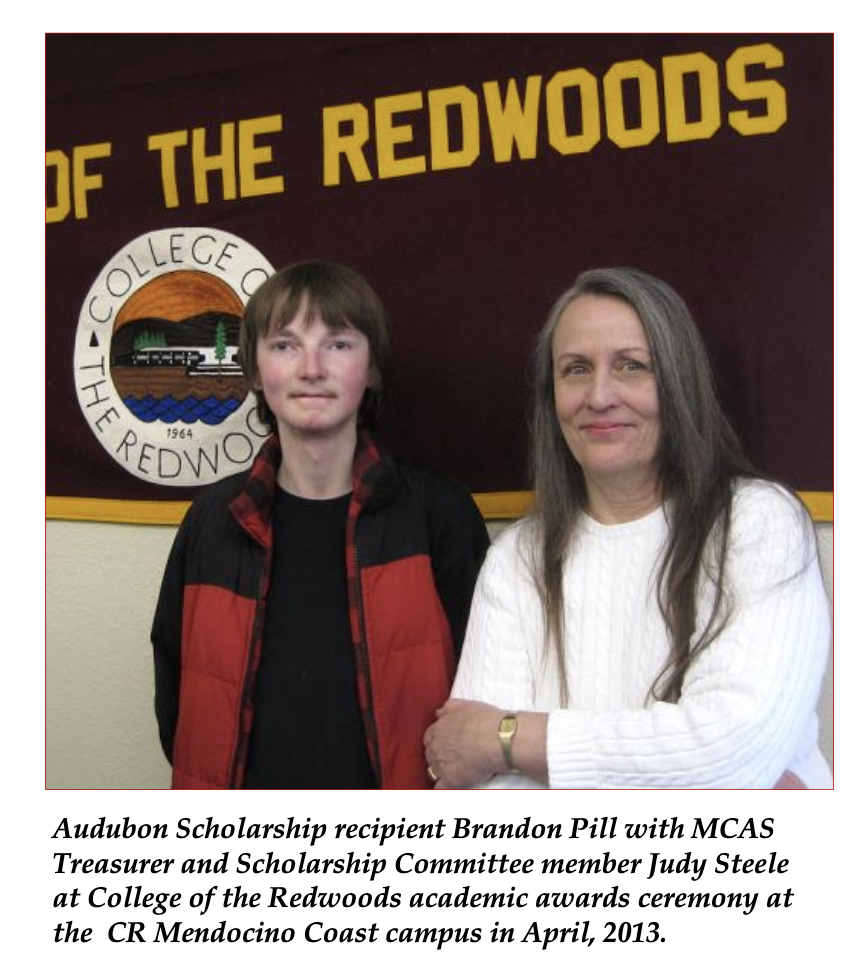
March is National Women’s Month, and it is time to honor the dedicated women who created and nurtured this organization.
The Mendocino coast has always been an exceptional place for watching birds, and birders tend to seek out others with whom they can share their stories. In the mid 1970s, birdwatching began to gain popularity among the general public. Good illustrated field guides were readily accessible, as were decent, affordable binoculars. Christmas Bird Counts began to spring up around the country. Sometime around 1977, several women came together and formed an informal birding club on the coast. Of that group, three founding members are remembered- Rita Fenton, Grace Gildersleeve, and Esther Meskis.
Although stories of that initial group have faded away with the passing of those who were involved, we can infer that the club continued to grow, attracting others who were interested in birds. While gathering information for Dorothy “Toby” Tobkins’ obituary, I asked the chapter’s first president, Joe Reding, how the chapter got started. He told me that around 1982, he was asked to meet with Rita, Grace, and Esther. When he walked out of the meeting, he had been appointed president, and the Mendocino Coast Audubon Society was formed. Three women with a shared vision had created a force that would benefit the coast and its community for years to come.
It is a shame that so much of the chapter’s history has been lost. There are no known records from the period between 1982 and 1995, but many of the women who would help shape the organization, such as Grace Steurer and Toby, were joining the others. The chapter’s oldest known newsletter, from September 1995, lists a full slate of thirteen directors- eight women and five men. The officers that year were Ginny (Oesterle) Rorby, president; Rita Fenton, secretary; and Esther Meskis, treasurer. Grace Gildersleeve had reportedly returned to the Bay Area. Two other well-known women on the board that year were Ronnie James and Pam Huntley. Having begun their association with the nascent local Audubon Society in 1977, Rita Fenton would serve on the board of directors through the 96/97 season, while Esther would continue, usually as treasurer, until June of 1999. If this chapter owned an office, their portraits would hold a special place of honor.
Through the mid to late 90s, the chapter grew in both membership and influence. Ronnie James was in charge of membership and posted the names of new members in the newsletter. In 95/96 81 new members joined the chapter. In 96/97 100 new members were added. Pam Huntley was teaching grade school students about birds, using the new binoculars the chapter had purchased. Kris Carter wrote the field guide to birding locations along the Mendocino coast. Chapter president Ginny Rorby had joined with others to file suit and successfully protect public access to Glass Beach from Elm Street to the Pudding Creek Trestle. Tina Fabula was banding birds on the Navarro River. Chapter newsletters regularly posted information on state and national conservation issues.
The turning of the century in 2000 marked a turning point in the leadership of MCAS. New names appeared in leadership positions. In September 2000, Ginny Wade replaced Ginny Rorby as president. Kris Carter moved to Davis. Charlene McAllister became the chapter secretary. In 2001, Jeanne Coleman became education director, Leslie Lebeau was in charge of fundraising, and Louise Mariana began an exceptional tenure as conservation chair. Andarin Arvola took over as newsletter editor. Tanya Smart joined as an at-large member and would later serve for several years as chapter secretary. Judy Steele joined the board in 2002, served as treasurer for many years, and continues to support the chapter in an off-board capacity 24 years later.
In 2001, the estate of founding member Rita Fenton donated many of its assets to the chapter for a fundraising campaign. Ginny Rorby and Ellen Bushansky solicited additional items for their “Bucks for Birds” event. The proceeds from that event were used to fund the creation of the chapter’s retail outlet at the Botanical Gardens. Audubon at the Gardens opened on August 1, 2001, and was managed by Ellen until its closing. I have fond memories of visiting the store and watching birds at the feeders.
Two more women had a great financial impact on the chapter through their generous estate planning. The bequests of Jean May and Huldie Clark have enabled your chapter to greatly expand its educational programs and scholarship offerings.
Education has been a top priority since the earliest days of the chapter, and the women of MCAS have continually worked to develop effective programs and take them into the classrooms. If the child is father to the man, then the efforts of Pam Huntley, Cynthia LeDoux-Bloom, Tina Fabula, Charlene McAllister, Erica Fielder, Judy Steele, Angela Liebenburg, Jeanne Coleman, Sue Coulter, and Sarah Grimes will continue to shape the value system of coast citizens for years to come.
Women of the chapter have also led the way in field studies and conservation efforts. Angela Liebenberg and Becky Bowen obtained grant funding for Save Our Shorebirds, a 16-year MCAS conservation program in partnership with California State Parks, where more than 100 volunteers gathered year-round shorebird census data along the entire coastline of MacKerricher State Park from Glass Beach to Ten Mile River. Those data were submitted to Cornell University’s international database--and made available to agencies, schools, and organizations at no charge. Alison Cebula, Toby, and others have worked hard to protect the Western Snowy Plovers on Ten Mile and Manchester beaches. Charlene McAllister, Peggy Martin, Alison Cebula, Sonya Popow, Gail Nsentip, Terra Fuller, Marissa Johnston, Judy Steele, Amelia Schall, Tess McGuire, and others have sustained our efforts to monitor nesting Black Oystercatchers for fourteen years.
Finally, in the past twenty years, thirty-six members have served on the chapter’s board of directors. Twenty-four were women, twelve were men. This accounting is not meant to be a contest, but an indication of the level of support provided by the women of this chapter. Women were the driving force that created this chapter. The women who followed grew and sustained the organization. The women of today are leading the chapter into a challenging future. They have earned our respect and appreciation.
I apologize in advance for all those I have failed to mention. There have been so many important women in the history of the chapter that I was not able to mention them all. I welcome any and all feedback regarding omissions or errors. And finally, you are invited to attend the monthly meeting of the Fort Bragg Garden Club at 1:00 pm on Monday, March 9, at the Presbyterian Church of Fort Bragg (367 South Sanderson Way). I will speak about the impact of women in the Audubon movement from the 1890s to the present, including their impact on our local chapter.