Sightings - February 2026
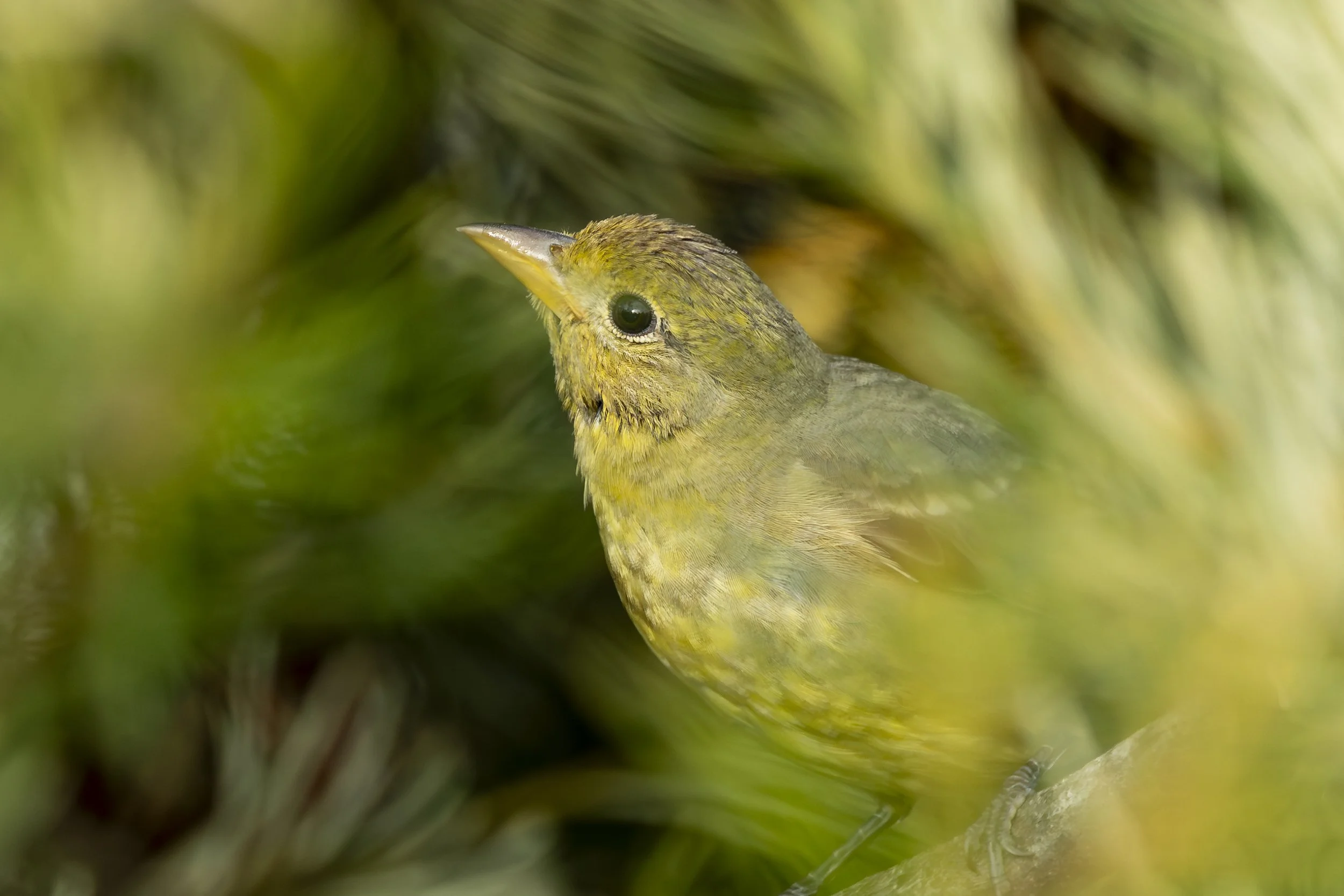
Western Tanager, Mendocino Coast Botanical Gardens, 2/6/2026, photo by Roger Adamson
February is often a very slow month for finding unusual birds because most individuals have settled into their winter quarters and are not moving around much. That, combined with the numerous rainy days in February, keeping all but the most optimistic birders indoors, resulted in very few rare or unusual bird reports over the last month. Two of the expected seasonal changes are that both Rufous and Allen’s Hummingbirds start returning from their winter in Mexico and we have had three reports of Rufous Hummers (MD, JJ) and about ten reports of Allen’s (JJ, RT, KW, CH, MC, MD, EE, TB, LK, RA) this month.
The first rare bird of February, a Red-naped Sapsucker (RNSA), was reported 2/2 from a home near Willits (MdSA). Good photos confirmed this as pure RNSA. Often individuals that initially appear to be RNSA are shown to be hybrids with our more common Red-breasted Sapsucker. Similarly, we often see hybrids of Yellow-bellied Sapsucker and photographs are always desired to clarify. Indeed, a hybrid Red-naped Sapsucker x Red-breasted Sapsucker was well-photographed in Ukiah on 2/6 (GG).
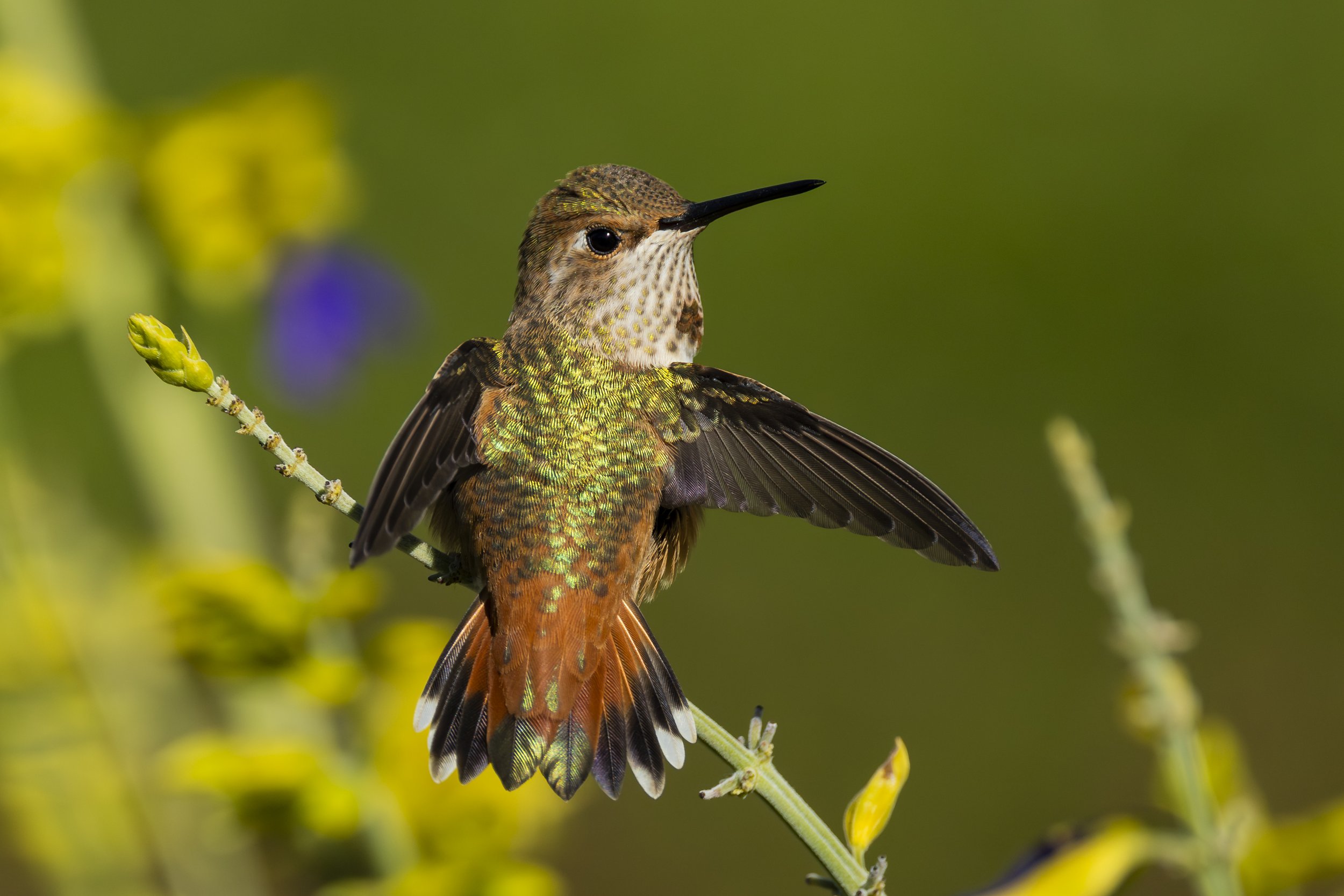
Adult female Allen’s Hummingbird, Mendocino Coast Botanical Gardens, 8/4/2025, photo by Roger Adamson
Also on 2/6, a Western Tanager was photographed in the Mendocino Coast Botanical Gardens (RA). The next day, 2/7, a Nashville Warbler was found in Gualala (MC). On about 2/10 a Burrowing Owl was seen on the north edge of the Mendocino Headlands, probably the same bird last seen in the same location on 21 November (CL). At least eight White-throated Swifts, the first of the season, were reported from Frog Woman Rock south of Hopland (BK).
A single American White Pelican (AWPE) photographed flying over Boonville on 2/14 became the first report on eBird of that species in the Anderson Valley (AR). The majority of AWPE reports in Mendocino County are from the Russian River Valley. On 2/16 a single Horned Lark was photographed on the Mendocino Headlands (BD); this was a very unusual sighting as most of our records are from October and November. The observer is a local photographer, but not an active birder, so the report was several days old before coming to light.
And now we venture into the taxonomic weeds. A possible Vega Gull was photographed on Virgin Creek Beach on 2/19 (LW); this still waits comments by gull experts as this presents a difficult field identification. At the risk of over-simplification, until the advent of genetic analysis the Vega Gull of northeast Asia was considered a subspecies of the “Herring Gull” complex. Most authors now separate American Herring Gull (common here), European Herring Gull, and Vega Gull as full species. Further complicating identification, Vega can hybridize with Slaty-backed, Glaucous, Glaucous-winged and Lesser Black-backed Gulls. Similarly, American Herring can hybridize with Glaucous, Glaucous-winged, Lesser Black-backed, and other large, white gulls. While most of these hybrids do not closely resemble Vega, some do. By now you have a glimpse of the problem, and with that I admit to being out of my depth!
Thanks to all who reported sightings: Matthew Dodder (MD), John James (JJ), Rich Trissel (RT), Karen Wilkinson (KW), Cheryl Harris (CH), Michael Coustier (MC), Elias Elias (EE), Tim Bray (TB), Larry Knowles (LK), Roger Adamson (RA), Marisela de Santa Anna (MdSA), George Gibbs (GG), Chris Lamoureux (CL), Bob Keiffer (BK), Adi Rao (AD), Bob Dominy (BD), Lisa Walker (LW).