Nerding out with CAFB Numbers
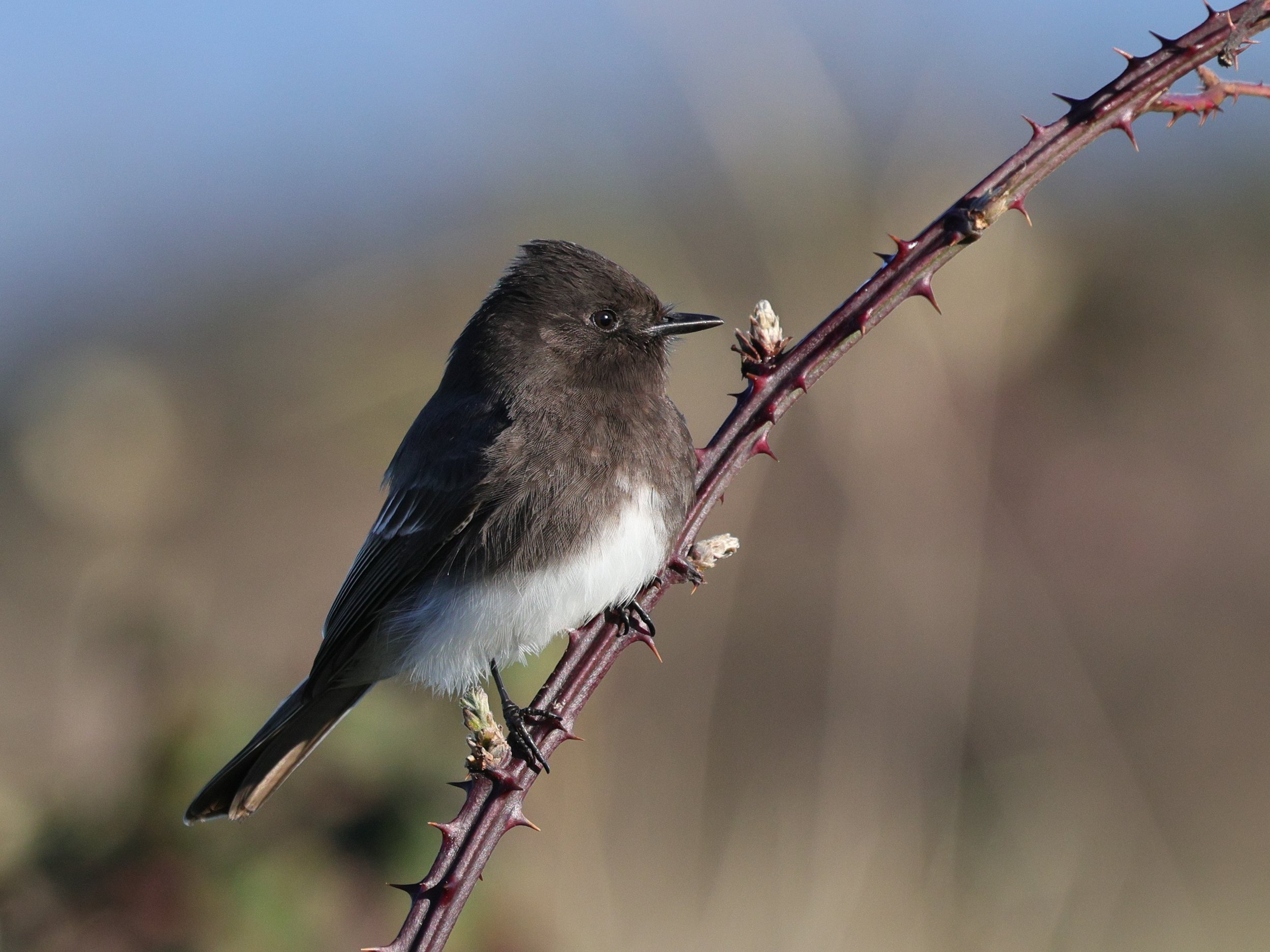
Black Phoebe, photo by Tim Bray
The 15th Fort Bragg Christmas Bird Count, conducted on 28 December 2025, resulted in a total of 13,550 individual birds counted. That number is almost exactly the same as the average of all 15 years, a somewhat surprising result, as it seemed to many of us that we were seeing fewer birds than usual (and we had fewer observers). Even more surprising to me, we set new record high counts for fourteen species: Cackling Goose, White-winged Scoter, Red-throated Loon, Short-tailed Shearwater, Red-shouldered Hawk, Wilson’s Snipe, Black Phoebe, Canada Jay, Western Bluebird, Song Sparrow, Orange-crowned Warbler, Nashville Warbler, Tennessee Warbler, and Palm Warbler.
The geese, scoters, loons, and shearwaters are perhaps not surprising, as we had an unusually good offshore trip in the afternoon, with several very good seabirders on board. The warblers are partly explained by rarity and partly by increased local expertise in finding and identifying them.
The ones that really surprise me are the common birds – Red-shouldered Hawk, Black Phoebe, Western Bluebird, and Song Sparrow. All of these are abundant, conspicuous, easily identified, and not especially variable in annual population. Did they just have a good year of reproductive survival? Or did we just get better at counting them? Those questions might not be answerable with the data we have. In any case, it is heartening to see.
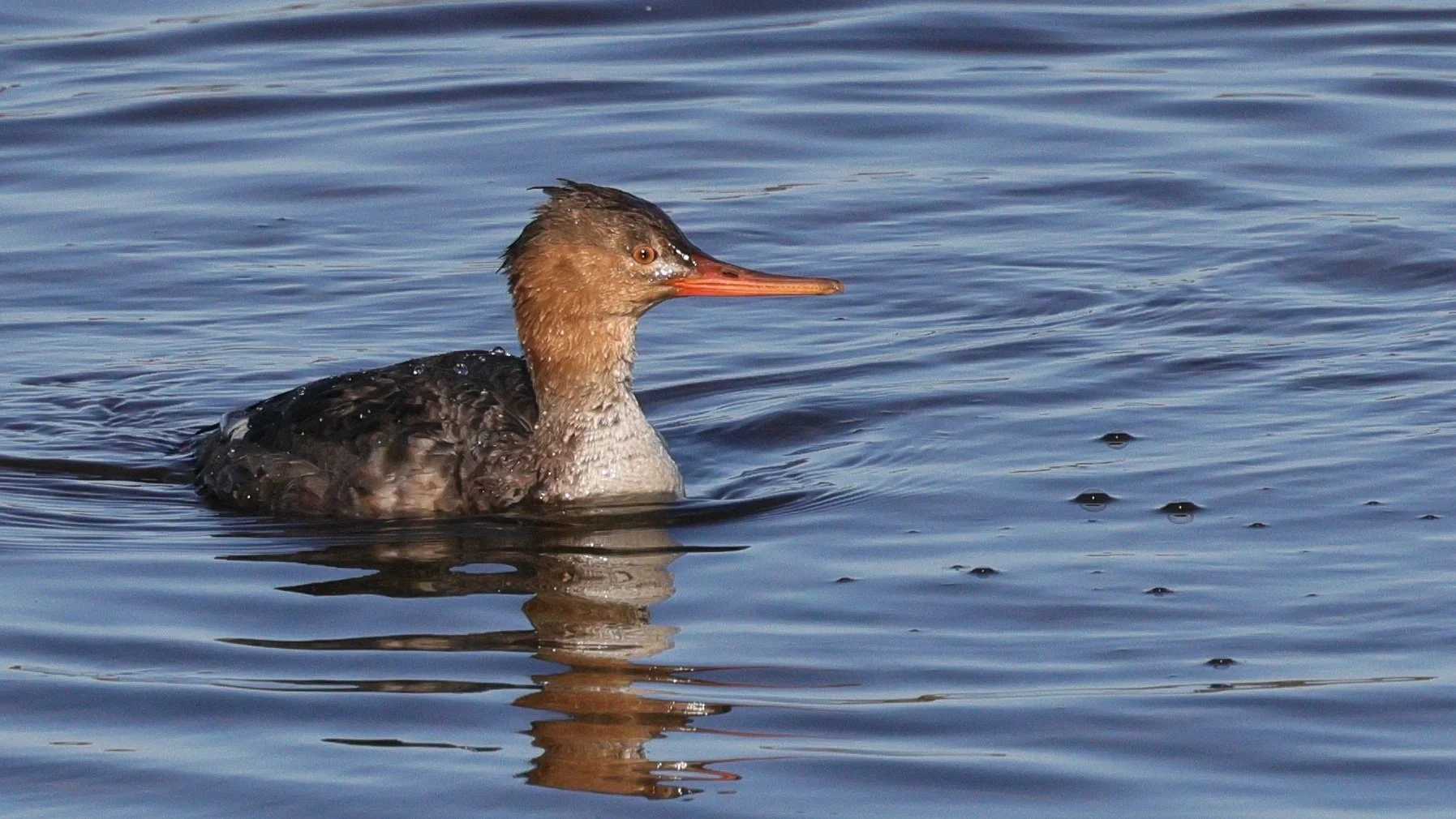
Red-breasted Merganser femalephoto by Tim Bray
Low counts were set for Golden-crowned Sparrow, Merlin, Northern Flicker, Black Turnstone, American Coot, and Red-breasted Merganser. Merlins are never abundant, so a low count is not a surprise; and waterfowl in general are not abundant on the coast this winter, so the low Coot number is consistent. More concerning is the decline in Black Turnstone, a bird that was formerly abundant here but has declined significantly over the years. Our high count of 343 was on the third Count in December 2012, and this year we counted only 54 of them.
The low counts for Northern Flicker and (especially) Golden-crowned Sparrow are puzzling. Both are abundant and easily identified, so it is unlikely a problem with observation. One hopes it’s not a trend.
Fifteen years of data is just about where you start getting statistical significance, so it’s too soon to get really excited about any of these observations. It does highlight the importance of carrying on this kind of effort. Many scientific studies draw on CBC data, as it provides one of very few continuous long-term data sets produced from a consistent protocol. The mid-winter timing may seem odd and sometimes annoying to us when we are out there in bad weather, but it produces extremely valuable information. My thanks to all of you who participate in the annual Counts here!
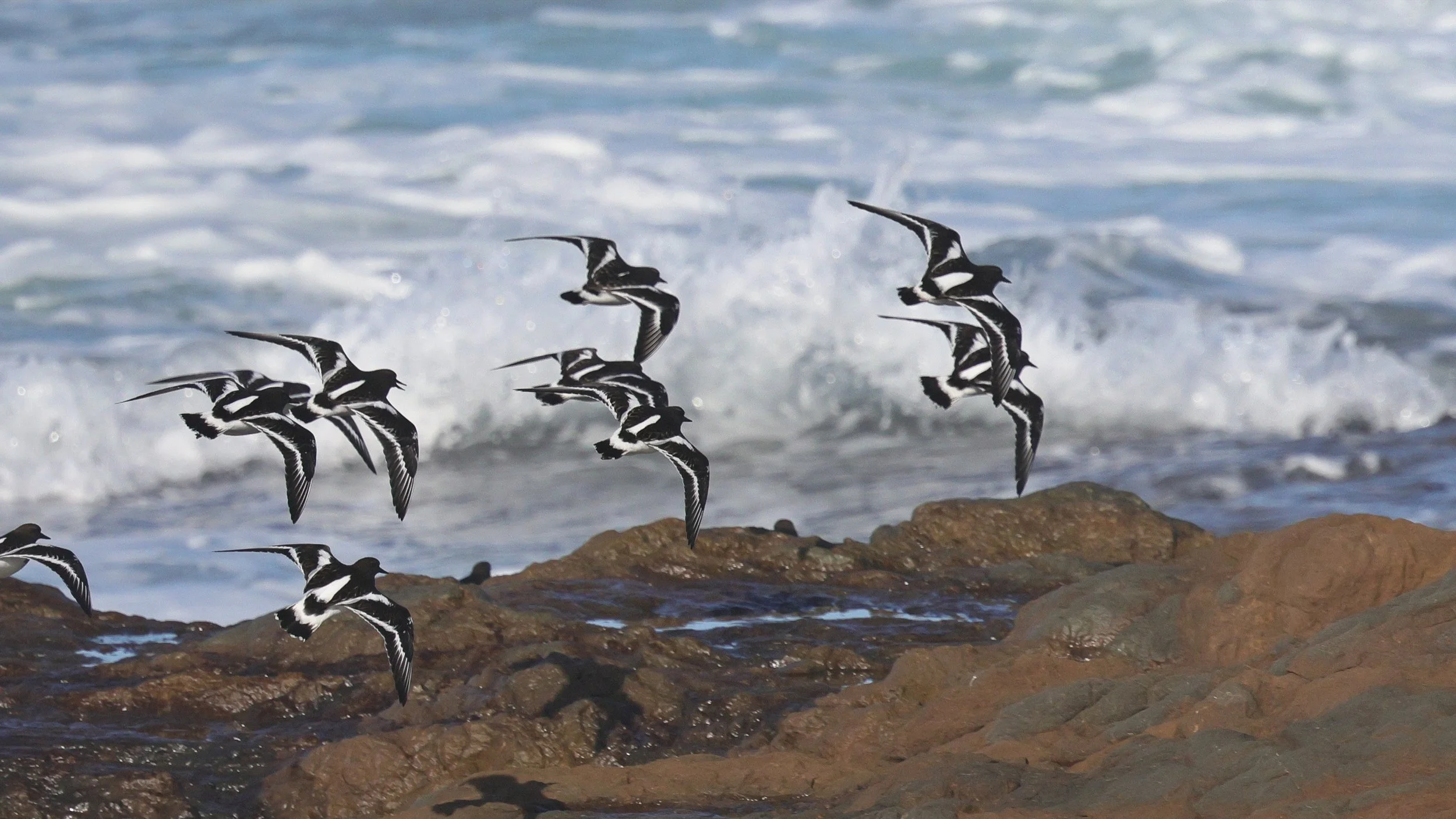
Black Turnstones in flight, photo by Tim Bray