
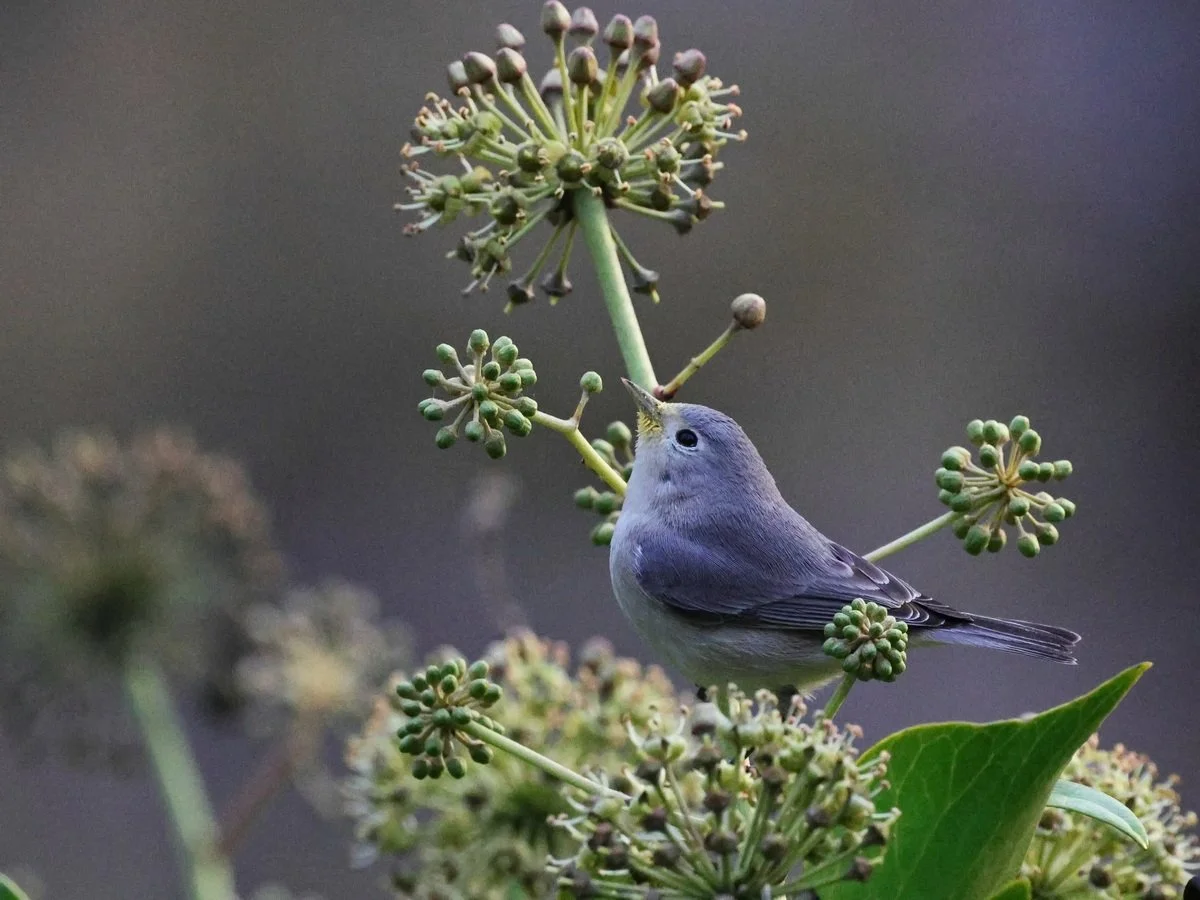
Lucy’s Warbler, photo by Tim Bray
“Winter Birds of the Mendocino Coast”
Slide show, Quiz, and Drinking Game
by Matt Franks and Tim Bray
Monday, December 8 at 7:00 PM
via Zoom
The Mendocino coast is a winter birding hotspot, with more than 130 species regularly found on each of our Christmas Bird Counts. Instead of trying to review all of them in one presentation and wearing everyone out, we have created a series of video tutorials on the Mendocino Audubon YouTube channel.
Look under “Playlists” for “Birding Tutorials.” There you will find ten videos focused on certain taxonomic groups, providing tips on what to look for when trying to identify these birds in the field. These may help you work on some of the more challenging aspects of birding: Raptors, Owls, Woodpeckers, Sparrows and Finches, Grebes, Cormorants, and Gulls (which were also covered in detail by Peter Pyle in the November and October editions of the newsletter). You can go through those at your own pace, skipping through the stuff you already know and slowing down to let the new information soak in.
Having done those, we now feel free to loosen up and have some fun with the annual slide show of winter birds. Instead of trying to teach you anything, we want to find out how good you are… and we are working in a couple of new wrinkles this year, so study up and prepare for the quiz!
Matt will lead a half-hour tutorial on using eBird for the CBC, starting at 6:30 before the slide show begins. eBird is a great alternative to paper checklists, much easier to deal with in the field and it makes the data instantly accessible.
Tim is the Compiler for the Fort Bragg Christmas Bird Count, and President of the Mendocino Coast Audubon Society. Matt is a second-generation Mendo birder and Vice-President of the Mendocino Coast Audubon Society.
Counting Birds for Science and Fun
Audubon’s Christmas Bird Count is the largest and longest-running citizen-science effort in the world. Started by Frank Chapman in 1900, it quickly became a popular alternative to the “side hunt” of the 19th century. Now tens of thousands of people join every year in an effort to “make birds count”.
Participants join field teams, or bird their own yards, within a defined circle 15 miles in diameter. The goal is to identify and count every bird you see within the circle in a 24-hour period. Some of us start in the early morning darkness, calling and listening for owls, and sometimes linger after dark hoping for just one more. Others just pop out for a couple of hours in the morning, or even stay indoors and count birds through the window. It’s all good and it all counts!
The Fort Bragg Count will be held on Sunday December 21, 2025. The circle extends from the south bank of Big River north to Little Valley Road. If you live anywhere within that region, you can participate simply by counting birds in your yard. Or you can join a team birding in the field – walking, driving, bicycling, kayaking, and possibly taking the Kraken out to sea. At the end of the day, we will meet in Caspar for a Count Dinner and tally up the finds. For team assignment, checklist and protocols, contact Tim Bray or Roger Adamson (radamson@mcn.org).
The Manchester count, now in its 52nd year, includes the coast from Elk south to Lighthouse Point. It will be held on Saturday, January 3, 2026 and is a fantastic way to kick-start your birding year. This year the Count Dinner will be held at the Manchester Grange Hall on Crispin Road. Contact David Jensen, djensen@mcn.org to participate.
Topic: MCAS Winter Bird Quiz 2025
Time: Dec 8, 2025 06:30 PM Pacific Time (US and Canada)
Join Zoom Meeting
https://us02web.zoom.us/j/86351262022
Meeting ID: 863 5126 2022