Spring Migration
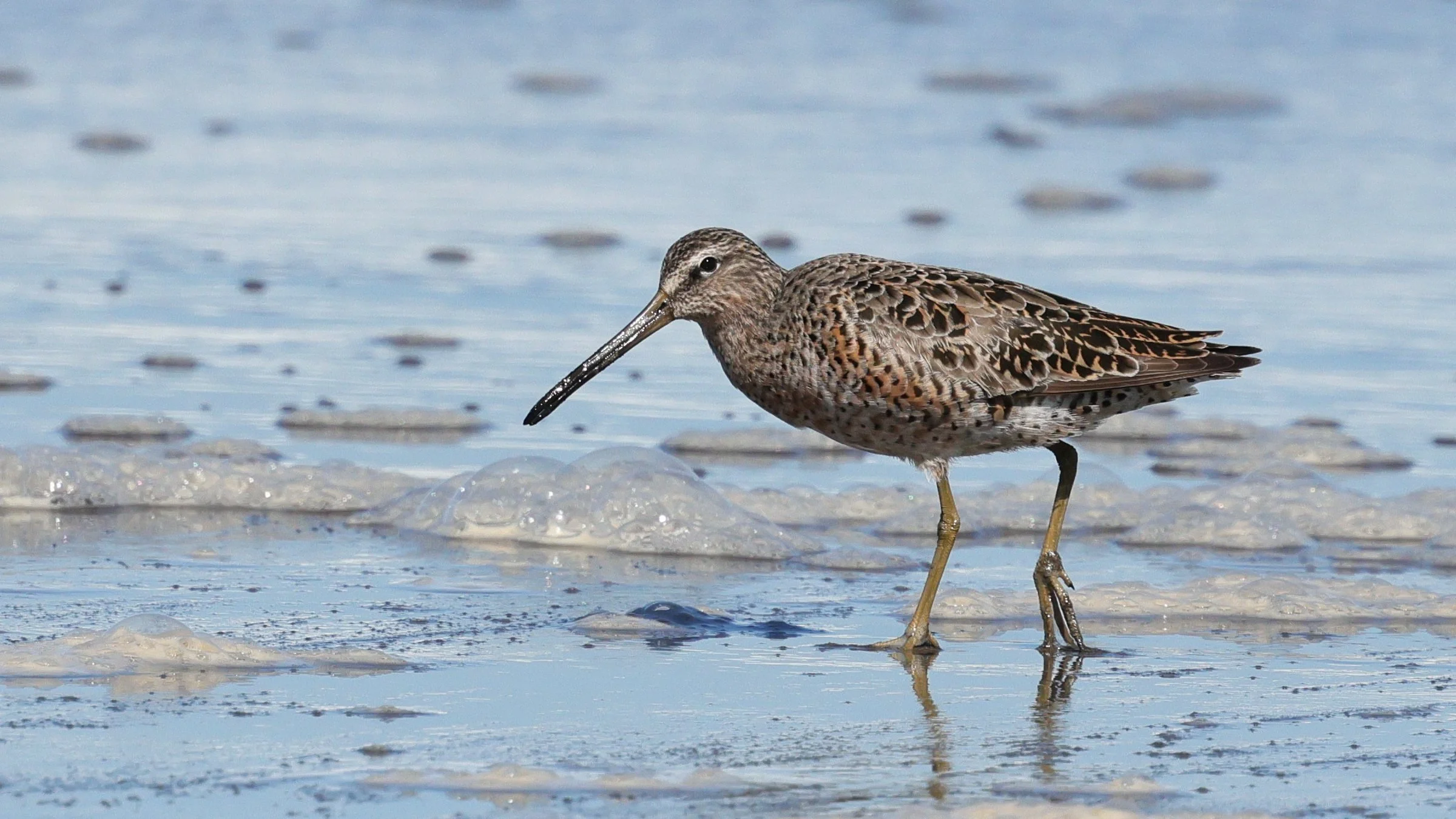
Short-billed Dowitcher photo by Tim Bray.
No doubt you all have noticed the return of many summer breeding birds, and the departure of most of our wintering migrants. Mornings are filled with song, and we can see a lot of activity as birds flit back and forth carrying nest material or even already feeding young. It’s time to be careful about pruning, tree work, or anything else that might disturb or displace nesting birds.
Songbirds mostly migrate at night, so we don’t really see it happen with our own eyes. They just appear and disappear seasonally, a phenomenon that has fascinated people for thousands of years. Technological advancements have revealed much about their movements, but there are many mysteries to be solved, especially about the wintering grounds for many species. For a long time scientists in the northern hemisphere tended to focus their study on birds breeding here, neglecting to note that those birds spend most of their lives elsewhere. This has now become a major concern as development in the global south is threatening habitats about which we know comparatively little.
On the beaches and over the nearshore waters you can really witness the spectacle of migration. Several species of shorebirds are moving north and stopping on some of our beaches to feed, fueling their amazing flights north. On a recent walk near the mouth of the Garcia River we found a congregation of Semipalmated Plovers, a tiny shorebird that is flying to the subarctic tundra of Alaska and Canada. Nearby were some Whimbrels, also headed for Alaska; some of them go all the way up to the arctic tundra of the North Slope. A lone Short-billed Dowitcher, already mostly in breeding plumage, was fueling up with mole crabs and sand worms, on its way to the Yukon-Kuskokwim Delta region of southern Alaska.
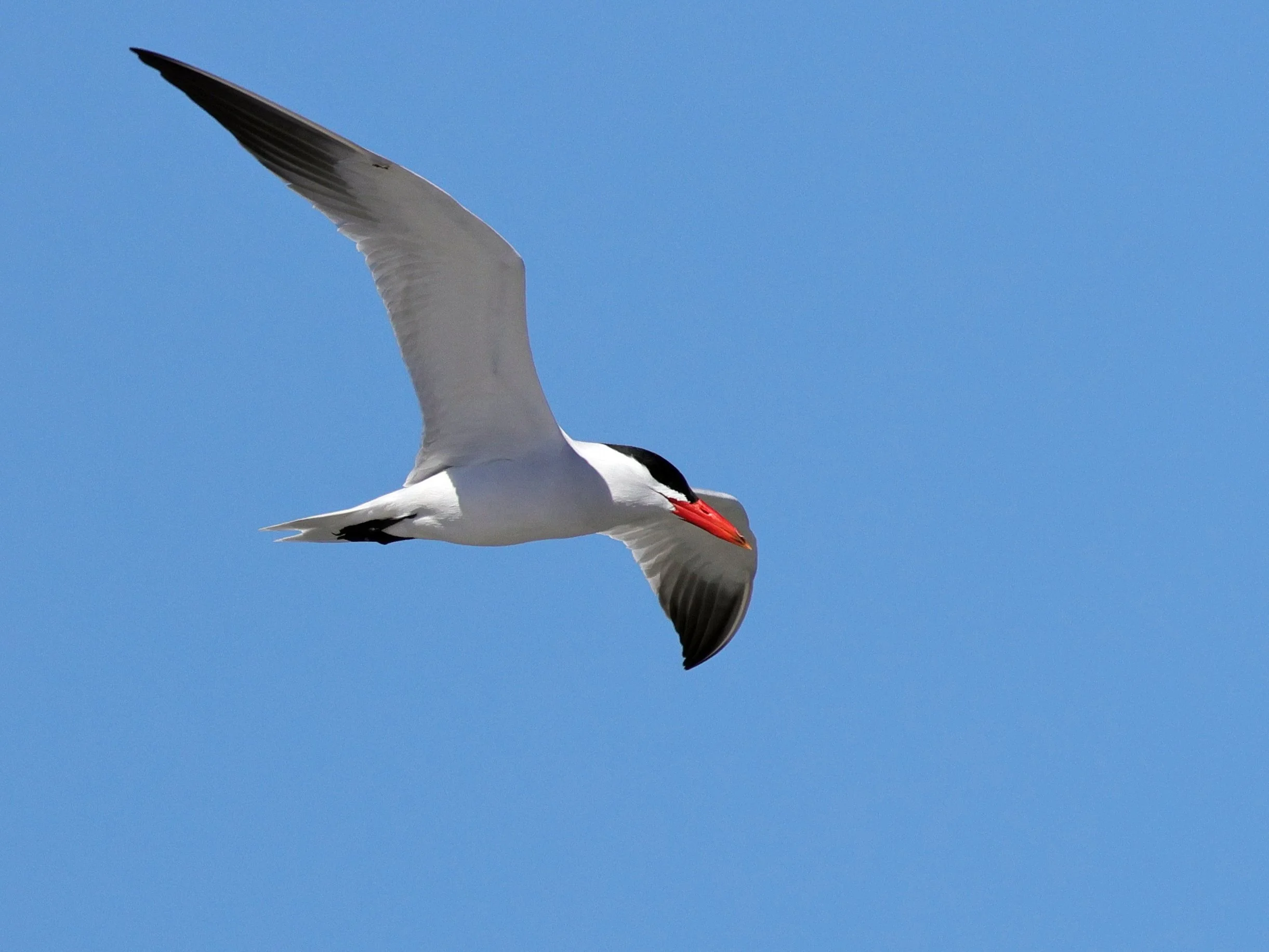
Caspian tern photo by Tim bray.
Caspian Terns fly north along the shoreline every April, and this year they were joined by unusual numbers of Elegant Terns. These are probably mostly heading to Humboldt Bay where both species nest on low sandy islands. It appears the Elegant Tern colony may be increasing, as we are seeing them more often and in greater numbers than we did 10-20 years ago.
Farther out over the water, the Pacific Loons are making their annual flight north to… you guessed it, Alaska again. On peak days there is a nearly constant stream of them going by, mostly 2-5 miles offshore. We got into that stream on a pelagic trip April 19 and stopped to watch as hundreds flew by within a few minutes. They are in breeding plumage now, a beautiful sight.
At the same time, seabirds like the Sooty Shearwater that breed in the Southern Hemisphere have just finished that effort and are now moving north, crossing the equator to reach the northern Pacific Ocean. In early April we saw a few of them, and on the 26th we encountered about ten thousand – including a single “raft” estimated at four thousand birds. Sootys have one of the longest known migration routes of any bird in the world, looping around both the Pacific and Atlantic in a figure-eight path that covers more than sixty thousand kilometers.
These are only a few examples of the spectacular movements happening right here, right now. Birds never cease to amaze us.
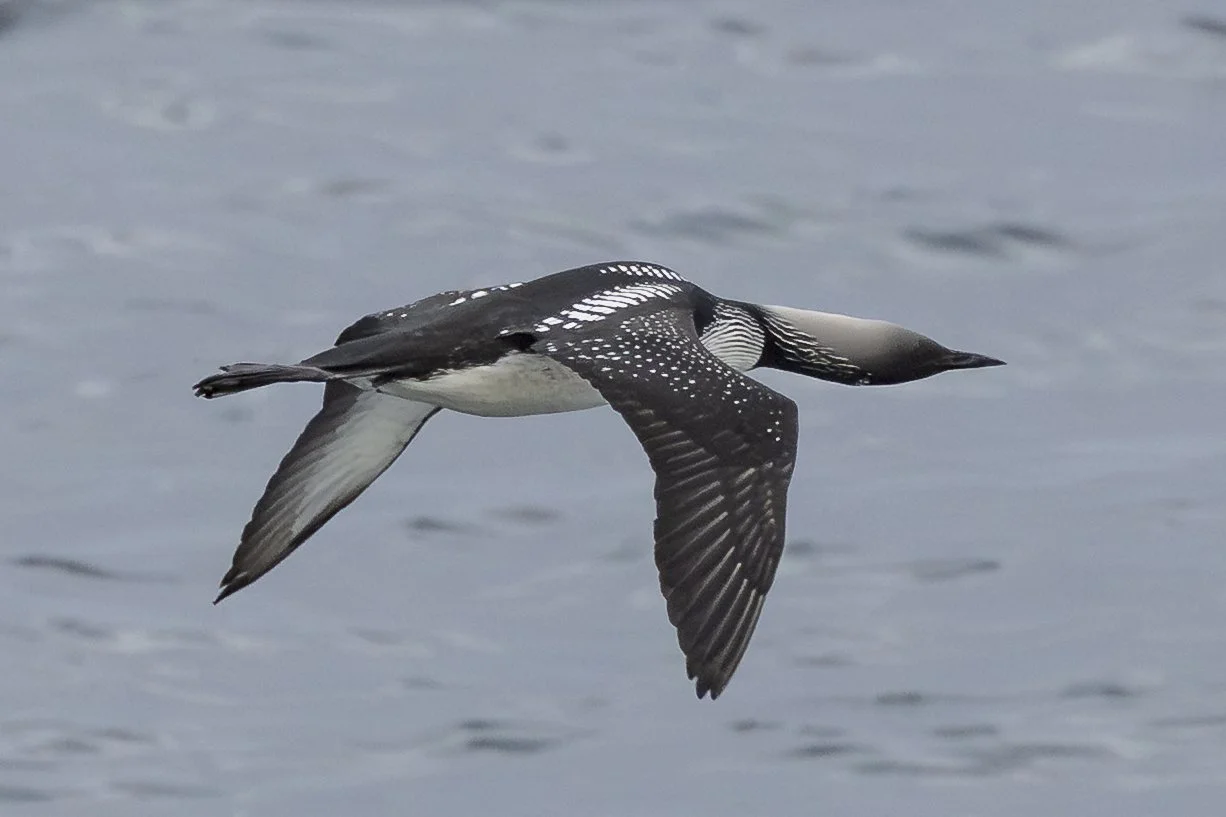
Pacific Loon in breeding plumage, 4/26/2026, Noyo Pelagics trip, photo by Roger Adamson.