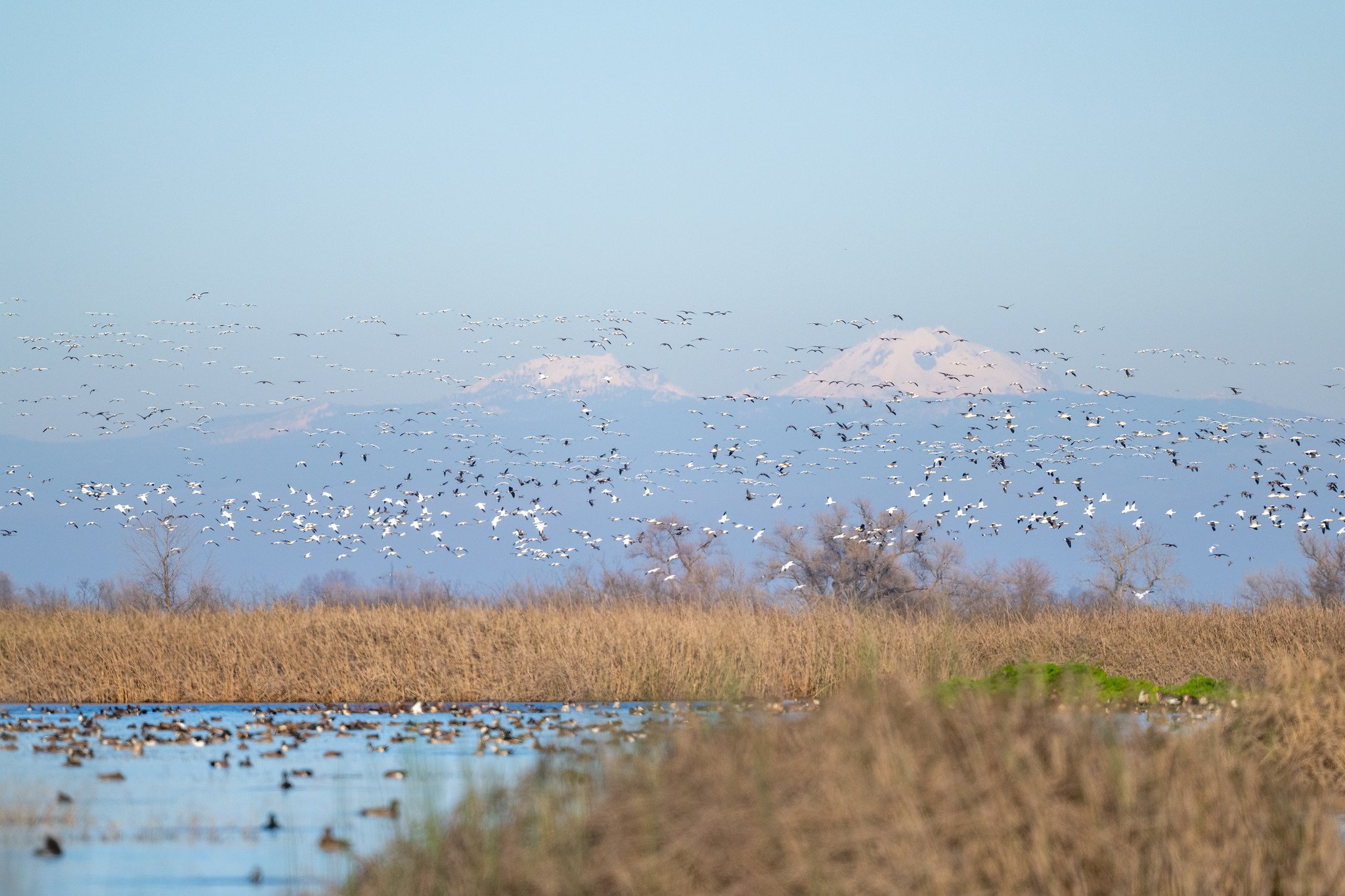
Snow goose photo by Mike Petrich
Our 2026 Central Valley birding trip began Saturday morning with flooded fields and skies heavy with fog at Colusa National Wildlife Refuge. The auto loop was closed due to recent heavy rains, so we took to the walking path instead and, despite the limited visibility, turned up a respectable number of birds.
The highlight of this first leg was a pair of Virginia Rails chattering back and forth in the reeds. From there, we headed into the town of Colusa and made a stop at the river levee, where we picked up a large group of Lark Sparrow, a couple of Phainopepla, and a Red-breasted Sapsucker.
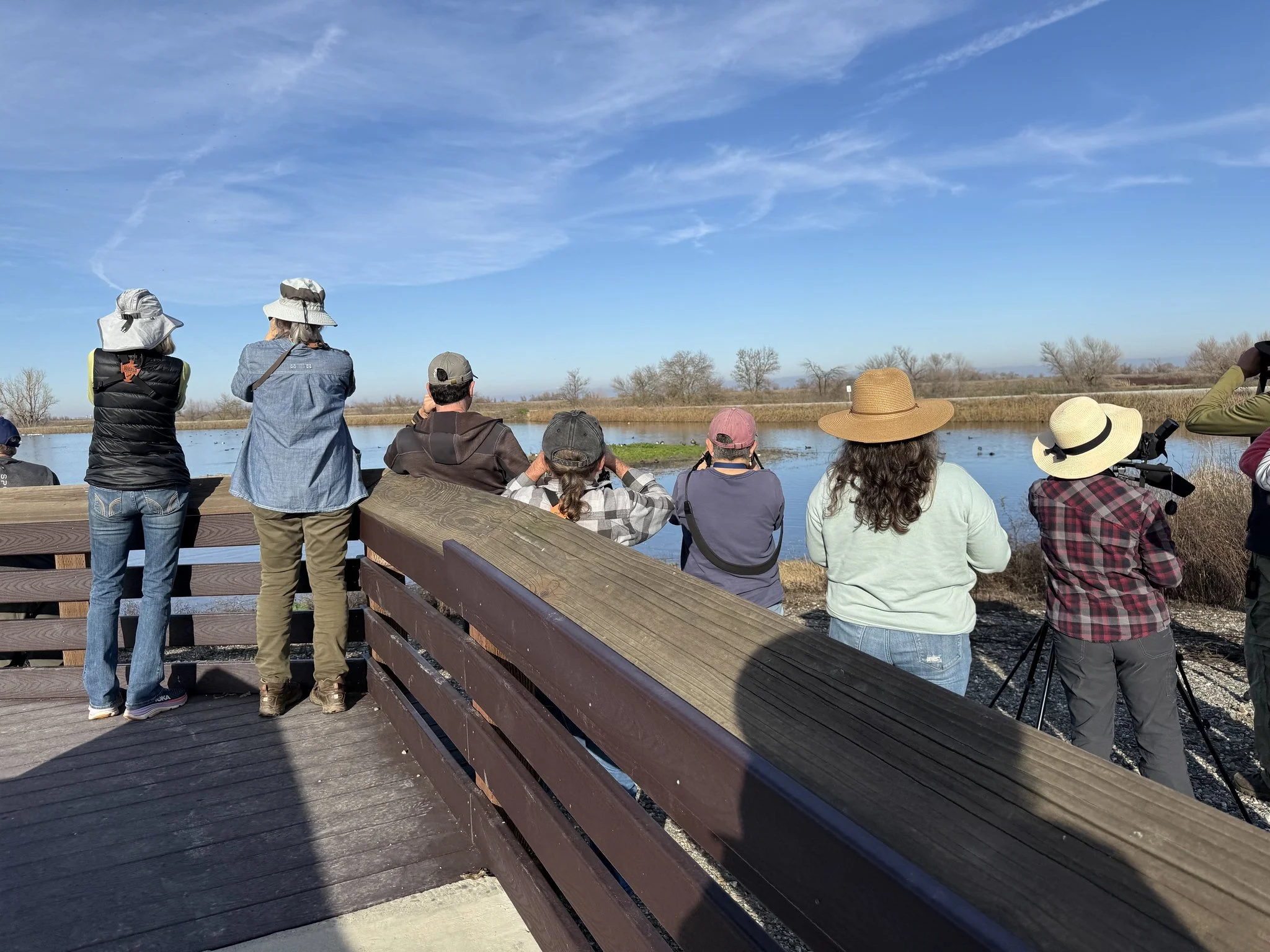
Eager for the fog to lift, we returned to Williams to meet our partners who had driven from the coast that morning. Now numbering nineteen birders, we ventured north into clear skies and unseasonably balmy weather at Sacramento National Wildlife Refuge. Tens of thousands of birds filled the refuge, and by day’s end we had identified 61 species on a single trip around the auto loop. The teal trifecta-Blue-winged, Green-winged, and Cinnamon Teal- was a standout, glowing in gorgeous light. Northern Shovelers, Northern Pintails, Gadwalls, Wigeons, and a host of other ducks were seen along the loop.
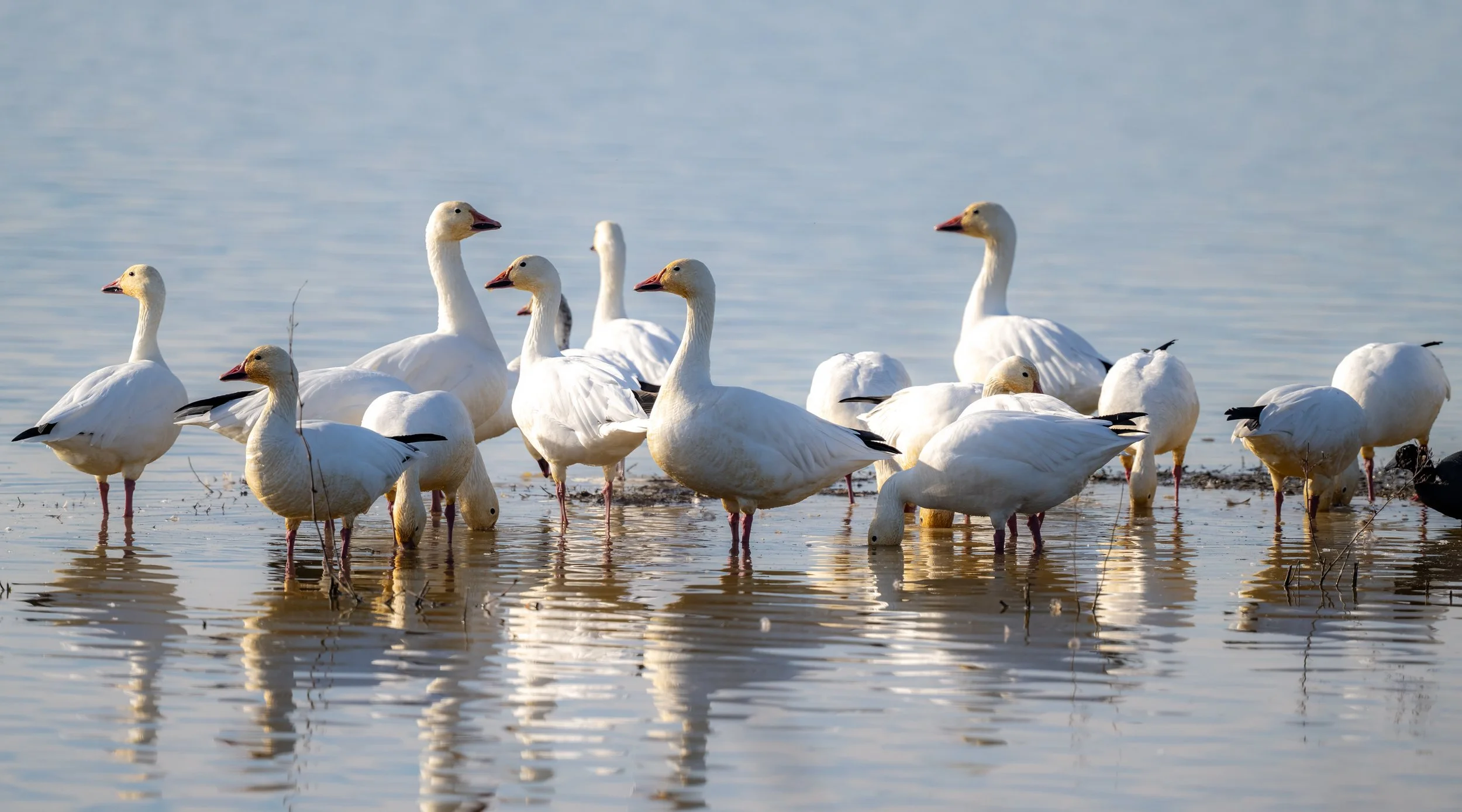
Snow goose photo by Mike Petrich
We also spotted Yellow-headed Blackbirds, an American Bittern, two Great-horned Owls, Horned Larks, a Loggerhead Shrike, Dunlin, Long-billed Dowitchers, American White Pelicans, and an astonishing number of Wilson’s Snipe, some feeding just two feet away in clear view. The most memorable moments came at sunset, with a Merlin slicing through the sky and landing on a bare branch while waves of White-faced Ibis were streaming overhead. Twelve hundred felt like a conservative count, but that’s what we entered into eBird. It was mesmerizing to witness and a wonderful ending to our first day.
Sunday again began wrapped in thick fog, but as we slowly made our way north, visibility steadily improved. Through the haze along the backroads to Gray Lodge Wildlife Area we were just able to glimpse a group of Sandhill Cranes in a nearby field. By the time we arrived, the fog had lifted completely, revealing another beautiful day and a rewarding array of bird sightings. Thousands upon thousands of geese filled the landscape, joined by dabbling and diving ducks, Green Herons, Gallinules, and an assortment of smaller birds. Stealing the show was a male Phainopepla, glowing in full sunlight and earning the most collective “oohs” and “aahs” from the group. We reluctantly tore ourselves away from Gray Lodge and headed up to Llano Seco as sunset quickly approached. Before exiting the auto loop, a few in the group were lucky enough to spot a Eurasian Wigeon and a Northern Waterthrush. I’m still reeling from the latter- it’s a bird I’ve yet to see myself.
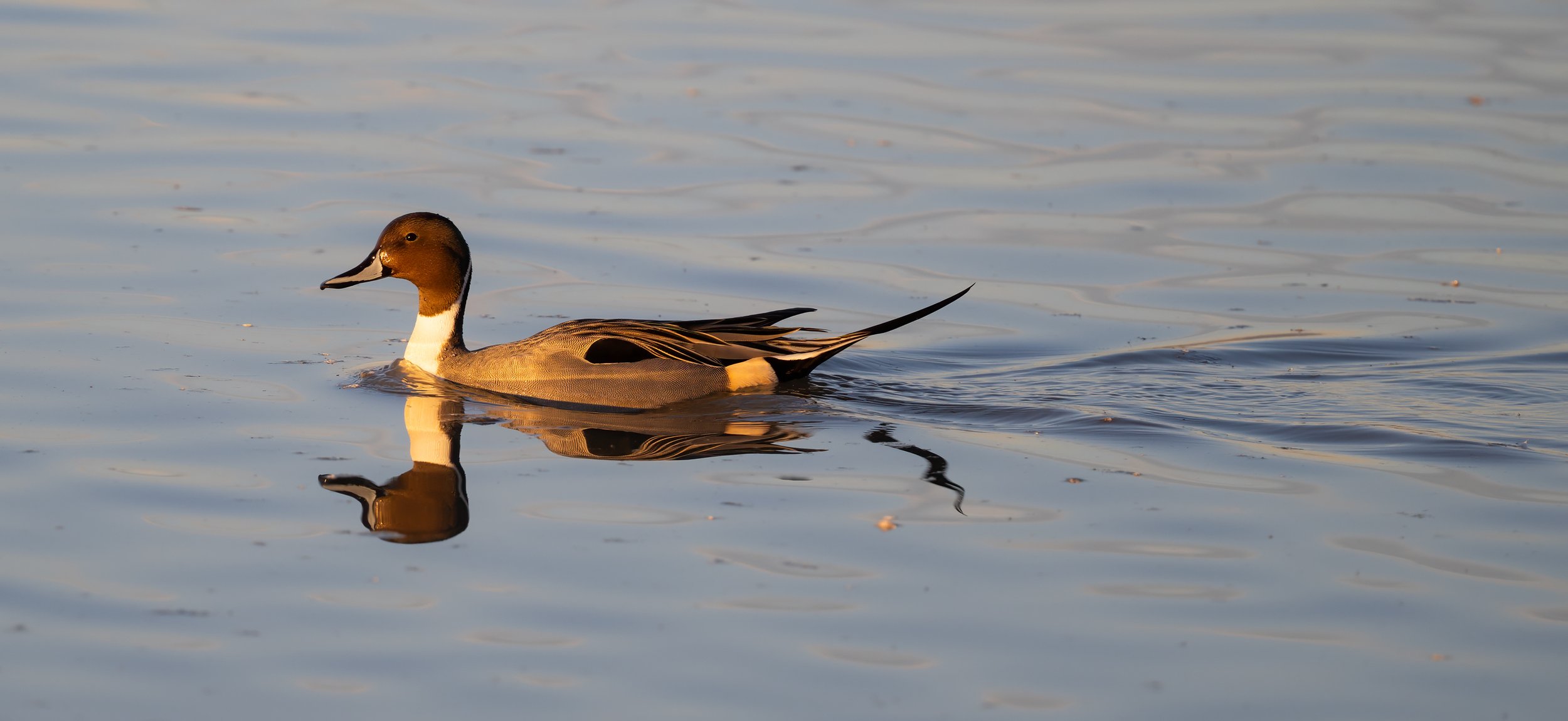
Northern Pintail photo by Mike Petrich
Llano Seco truly lived up to its nickname of “Pintail Central,” with thousands of Snow Geese also present. An eagle, repeatedly flying back and forth to a nearby tree, kept the ponds in constant motion, sending flocks of waterfowl into the air with each pass.
On Monday the morning fog was gone as we made our way to King Road. We spent the remainder of our time birding there and were rewarded with sightings of Common Goldeneye, Rock Wren, Yellow-billed Magpie, flocks of Lesser Goldfinch, Bald and Golden Eagles, and Ferruginous Hawks. For a complete list of species observed can be viewed on a trip list that Dave Jensen has compiled on eBird.
Huge thanks to Dave for leading another fantastic field trip to the Central Valley. He did a terrific job sharing his enthusiasm and birding expertise with the group. Another great turnout this year!